Weathering steel, widely known as Corten steel, has become a preferred material for modern architecture, infrastructure, landscaping, and industrial projects due to its unique self-protective patina and long-term durability. Among the most popular grades are Corten A and Corten B. While both deliver excellent atmospheric corrosion resistance, they differ significantly in chemical makeup, mechanical performance, fabrication behavior, and ideal use cases. This article breaks down the key differences to help you select the right grade for your global project.
What Are Corten A and Corten B?
Corten steel is a high-strength low-alloy (HSLA) steel that forms a stable, dense oxide layer when exposed to outdoor weather. This protective patina stops further corrosion and eliminates the need for painting or frequent maintenance.
- Corten A: Typically corresponds to ASTM A242, optimized for aesthetic appearance and atmospheric corrosion resistance.
- Corten B: Typically corresponds to ASTM A588, engineered for higher structural strength, toughness, and heavy-duty performance.
Understanding their differences ensures cost efficiency, structural safety, and design integrity for your overseas projects.
Chemical Composition Comparison
Alloy design directly determines corrosion resistance, strength, weldability, and patina formation speed. Below is a simplified comparison of key elements:
表格
| Element | Corten A (ASTM A242) | Corten B (ASTM A588) |
|---|---|---|
| Carbon (C) | Lower | Slightly higher |
| Phosphorus (P) | Higher | Lower |
| Copper (Cu) | High | High |
| Chromium (Cr) | Moderate | Higher |
| Nickel (Ni) | Limited | Added for toughness |
Key Takeaway:
- Corten A uses higher phosphorus and copper to accelerate patina formation and improve surface aesthetics.
- Corten B adds chromium and nickel, reduces phosphorus, to boost strength, weldability, and low-temperature toughness—critical for structural applications.
Mechanical Performance & Durability
Mechanical properties define whether a grade can support structural loads or withstand harsh environments.
Corten A
- Yield Strength: ~275–345 MPa
- Tensile Strength: 410–530 MPa
- Elongation: ≥20%
- Focus: Good ductility, ideal for bending, cutting, and forming into thin sheets and decorative parts
- Limitation: Not recommended for heavy load-bearing structures
Corten B
- Yield Strength: ≥345 MPa
- Tensile Strength: 480–620 MPa
- Better low-temperature toughness
- Higher fatigue resistance
- Focus: Structural integrity, load-bearing capacity, long-term stability in heavy use
- Advantage: Performs reliably in bridges, containers, and large infrastructure
Both grades form a protective rust patina, but Corten B maintains performance under higher stress and thicker sections.
Weldability, Fabrication & Patina Development
For international fabricators and contractors, processing characteristics are critical.
Weldability
- Corten A: Higher phosphorus may reduce weld toughness in thick sections; better for thin-plate, non-structural welding.
- Corten B: Lower phosphorus + nickel addition improves weldability; suitable for heavy structural welding with standard procedures.
Fabrication
- Corten A: Easy to cut, bend, roll, and laser-process; perfect for cladding, screens, and art pieces.
- Corten B: Supports heavy machining, thick-plate cutting, and structural fabrication; stable in large components.
Patina Formation
- Both develop a uniform brown–orange protective layer over 6–18 months.
- Corten A forms patina slightly faster for visual projects.
- Corten B delivers consistent patina even in thicker plates and structural parts.
Ideal Application Scenarios
The best choice depends on whether your project prioritizes aesthetics & light use or strength & structural load.
Best For Corten A
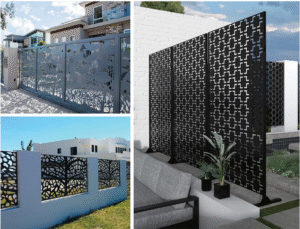
- Architectural facades, wall cladding, and decorative panels
- Outdoor sculptures, landscape walls, planters, and screens
- Thin-sheet components, gas flues, and aesthetic roofing
- Non-load-bearing architectural elements
Best For Corten B
- Bridge girders, highway guardrails, and railway components
- Shipping containers, truck bodies, and heavy equipment frames
- Structural columns, beams, and load-bearing infrastructure
- Large outdoor installations, port facilities, and industrial structures
- Projects requiring thick plates and long-term structural safety
How to Choose Between Corten A and Corten B
Use this quick decision guide for your global procurement:
- Aesthetic, thin-plate, non-structural: Choose Corten A.
- Structural, load-bearing, heavy-duty: Choose Corten B.
- Coastal / industrial atmosphere: Both work; prefer Corten B for structural parts.
- Welded heavy assemblies: Choose Corten B for safer, more reliable joints.
- Budget-sensitive decorative projects: Corten A is often more cost-effective.
Conclusion
Corten A and Corten B are both top-tier weathering steels, but they serve different purposes. Corten A excels in architectural beauty, easy fabrication, and corrosion resistance for visual applications. Corten B dominates in structural strength, weldability, and heavy-duty durability for infrastructure and engineering projects.
Selecting the correct grade reduces lifecycle costs, avoids rework, and ensures your project performs as intended for decades. As a professional weathering steel supplier, we provide Corten A & Corten B plates, coils, and custom processed parts with full mill certificates and third-party inspection (SGS/BV) for global markets.